Budget 2027 to 2028 consultation
Background
Every year, the council must agree a legal and balanced budget that sets out how much we intend to spend in the coming year and how we propose to raise the money needed to pay for these spending plans.
Over the last few years, we have worked to stabilise our finances despite major national and global challenges. At the same time, we have continued to invest in Bristol and the services people rely on. We have made important progress on the city’s priorities, continued to support vulnerable residents, built new homes, improved Bristol’s infrastructure, and kept investing in the long-term future of our city.
Bristol has many strengths. We are a centre for innovation, business, culture, sustainable growth, and we continue to attract investment and create opportunities. Inequalities remain present in people’s lives, and we are committed to making sure growth benefits all our communities. But we also continue to face considerable challenges. People are struggling with the cost of living, housing affordability and pressure on public services.
We are now planning next year’s budget and updating our financial forecasts for the next 5 years.
As we prepare the budget for 2027 to 2028, and update our financial forecasts for the years ahead, we face another challenging financial position. Our budget gap is projected to be £26.0 million next year, rising to £67.5 million by the end of the 5-year medium term period.
We use a large part of the council’s budget to deliver services that we must provide by law. The rest funds a wide range of other services, including providing early support to help residents stay healthier for longer and remain independent. As the number of people needing the legally required services increases, this adds to our budget pressures. Like many councils, Bristol must therefore make difficult decisions about how we balance rising costs, growing demand and limited resources.
In this consultation, we explain how our budget is funded, where the money is spent, and the pressures on the budget. We ask for your views on Council Tax and Social Care Precept for the coming year, April 2027 to March 2028.
These are 2 of the ways that the UK Government expects us to fund the services the council provides:
- Council Tax helps pay for the wide range of day-to-day services the council provides for residents. This includes collecting recycling and waste, maintaining parks, libraries and roads, and many other essential services across the city. Council Tax is charged to each household, based on the value of the property. There are 8 Council Tax bands from A, the lowest charge, to H, the highest. Council Tax bills also include separate amounts for police and fire services. We therefore refer to the part that pays for council services as ‘core’ Council Tax.
- Social Care Precept is an additional charge towards the costs of social care, for example to support older adults living independently in their homes.
The proposals for Council Tax and Social Care Precept in this consultation will not be enough on their own to be able to balance the budget.
Alongside any proposed changes to Council Tax, we must therefore continue to find efficiencies, modernise services, generate income where appropriate and make targeted investments that reduce costs in the future.
We know that many households continue to face financial pressures and we are committed to supporting residents through schemes such as Council Tax Reduction.
Looking beyond the next financial year, our ambition is to maintain a financially sustainable council that can continue to support residents, invest in communities, and create opportunities for future generations.
Tell us what you think
The consultation is open from Wednesday 14 October and will close at midnight on Wednesday 25 November. Please read the information in the survey, answer the questions you want to respond to and submit by Wednesday 25 November 2026 to make sure your views are considered.
Alternative formats
If you need this consultation survey as a paper version, or Easy Read, Braille, large print, British Sign Language, in another language, or in another alternative format, you can request this by emailing consultation@bristol.gov.uk or by calling 0117 922 2848.
Waxaad codsan kartaa qaabab kale oo dukumeentigan ah adigoo la xiriiraya consultation@bristol.gov.uk ama 0117 922 2848
Możesz poprosić o alternatywne formaty tego dokumentu, kontaktując się z consultation@bristol.gov.uk lub 0117 922 2848
Puteți solicita formate alternative ale acestui document contactând consultation@bristol.gov.uk sau 0117 922 2848
يمكنك طلب تنسيقات بديلة لهذا المستند عن طريق االتصال بـ
consultation@bristol.gov.uk
أو
0117 922 2848
تاسو کولی شئ د دې سند بديل فارميټونو غوښتنه وکړئ
consultation@bristol.gov.uk
يا
0117 922 2848
At the end of this survey, you can sign up to receive fortnightly email updates about council consultations and engagement.
What happens next
All responses to this consultation will be analysed and the feedback will help us develop final proposals for the level of Council Tax and Social Care Precept and proposals to increase income or reduce costs.
The council’s Strategy and Resources Policy Committee will consider these proposals on 18 January 2027 and agree a recommended budget for all councillors to consider.
The final decisions about the 2027 to 2028 budget will be taken by Full Council at its budget setting meeting on 9 February 2027. Both the Strategy and Resources Policy Committee and Full Council will take responses to the consultation into consideration when making their decisions.
Further information
Our budget: how it works
Overview
Every year, we agree on a budget for the following year which shows how much money we will be able to spend on services we provide.
The council’s total planned expenditure to deliver services this year, April 2026 to March 2027, is £1.43 billion. This is known as the ‘gross expenditure budget’. It includes all costs to deliver council services, before any income or funding is taken into account.
The overall gross expenditure budget of £1.43 billion is made up of four main budget areas:
- The Revenue Budget, also known as the ‘General Fund’, pays for day-to-day spending on a wide range of essential services that most people use. These include recycling and waste collections, running our parks and libraries, and maintaining our roads. We also provide less‑visible services, such as social care, which support people who need extra help, including some of the city’s most vulnerable residents. Social care makes up the largest share of the council’s Revenue Budget. The Revenue Budget in 2026 to 2027 is £955.2 million. This is 67% of the £1.43 billion overall budget.
- The Housing Revenue Account is mostly made up of the rent we collect from council tenants. This money is used to plan and provide services for people living in council housing, including repairs and improvements, and for a programme to build new council homes. The Housing Revenue Account in 2026 to 2027 is £166.0 million. This is 12% of the £1.43 billion overall budget.
- The Dedicated Schools Grant is money received from the UK Government each year to pay for schools and education services for children and young people in Bristol. The grant can only be used for these things. The Dedicated Schools Grant in 2026 to 2027 is £264.6 million. This is 18% of the £1.43 billion overall budget.
- The Public Health Grant is a yearly grant from the UK Government, which can only be used to promote good mental and physical health in the city and pay for services that help people stay healthy. This is supplemented by other public health related funding. The Public Health Grant in 2026 to 2027 is £46.7 million. This is 3% of the £1.43 billion overall budget.
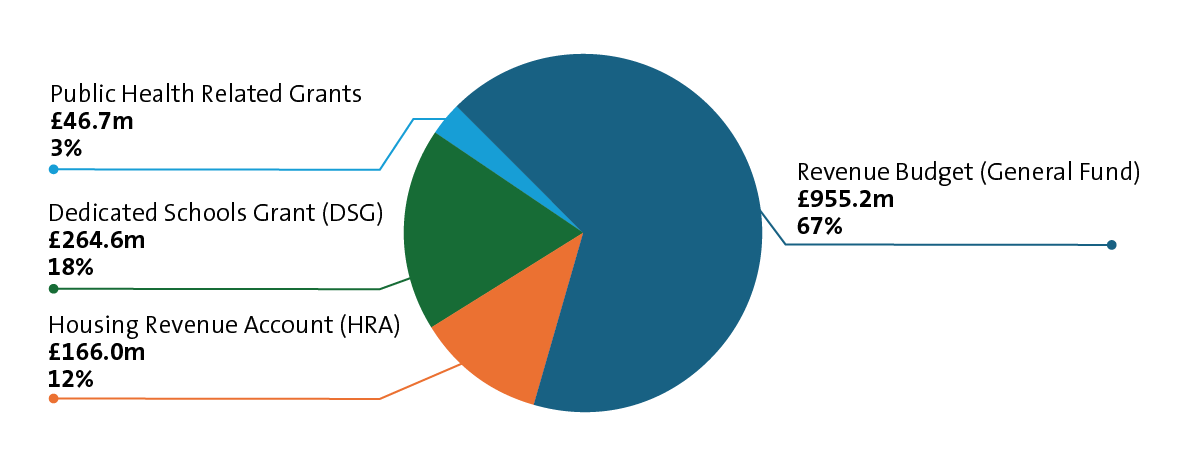
Figure 1: Four budget areas that make up the total spending to deliver services in 2026 to 2027
This consultation asks for your views on some ways we could raise money for the Revenue Budget. The other 3 budgets are funded in different ways and the council can only spend the money in those budgets on very specific things. Each year, where required, we consult on these other budgets separately before we set the council’s budget in February.
How the budget is funded
The main sources of income to fund the council’s budget of £1.43 billion are Council Tax, Business Rates and government grants. The sources of income and the percentage each contributes to our 2026 to 2027 budget are listed below and shown in Figure 2.
- Council Tax £316.5 million, 22%
- Business Rates £280.4 million, 20%
- Core Income Comprehensive Spending Review £40.2 million, 3%
- Dedicated Schools Grant £264.6 million, 18%
- Housing Revenue Account £166.0 million, 12%
- Public Health Grant £46.7 million, 3%
- Fees and charges £101.6 million, 7%
- Benefits £115.5 million, 8%
- Other grants £82.5 million, 6%
- Other income £18.4 million, 1%
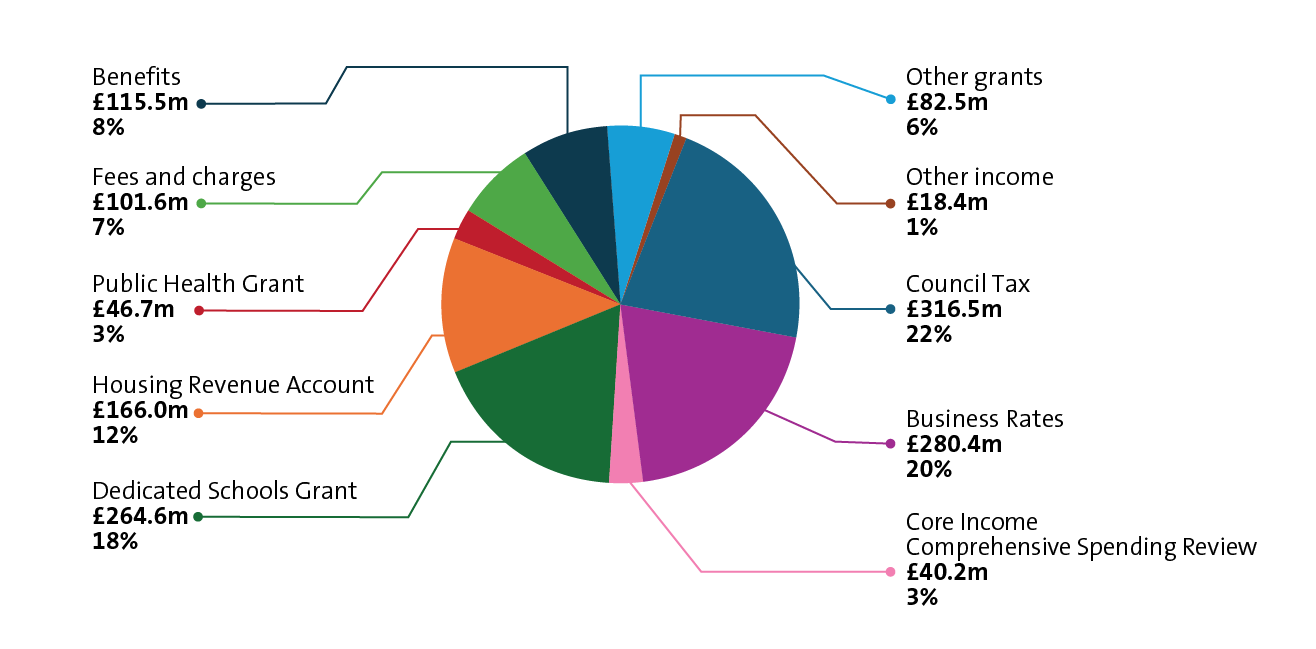
Figure 2: Sources of income for the gross expenditure budget in 2026 to 2027
Where the money goes
During the current financial year, 2026 to 2027, the council has budgeted total spending of £1.43 billion on providing a range of services for the people of Bristol.
The amount we are spending on services this year, 2026 to 2027, is listed below and shown in Figure 3. For each of the council’s 8 policy committee areas, we show spending in millions of pounds and as a percentage of the £1.43 billion total budget. For comparison, we have also shown the budget for each of these service areas last year, 2025 to 2026.
Adult Social Care
The Adult Social Care Committee is responsible for services for working age adults who need additional support. This includes help and care for older people, Disabled people, and people with learning difficulties.
- The 2026 to 2027 budget is £284.8 million. This is 20% of the total £1.43 billion budget
- The 2025 to 2026 budget was £268.7 million. This was 20% of the total £1.34 billion budget
Children and Young People, including Dedicated Schools Grant
The Children and Young People Committee is responsible for services supporting children in care and foster carers, local safeguarding and helping families, parents, schools, children and young people with Special Educational Needs and Disabilities.
- The 2026 to 2027 budget is £446.9 million. This is 31% of the total £1.43 billion budget
- The 2025 to 2026 budget was £409.2 million. This was 30% of the total £1.34 billion budget
Included in the budget for the Children and Young People Policy Committee is the Dedicated Schools Grant Budget of £264.6 million in 2026 to 2027 and £244.8 million in 2025 to 2026.
Strategy and Resources
The Strategy and Resources Committee is responsible for services that help the council function, such as human resources, legal services, finance, property, citizen services and IT.
- The 2026 to 2027 budget is £298.5 million. This is 21% of the total £1.43 billion budget
- The 2025 to 2026 budget was £296.8 million. This was 22% of the total £1.34 billion budget
Environment and Sustainability
The Environment and Sustainability Committee is responsible for services including waste and recycling, street cleaning, licensing, climate and ecology.
- The 2026 to 2027 budget is £65.1 million. This is 5% of the total £1.43 billion budget
- The 2025 to 2026 budget was £60.0 million. This was 4% of the total £1.34 billion budget
Transport and Connectivity
The Transport and Connectivity Committee is responsible for services that maintain roads and bridges, develop transport plans and parking services.
- The 2026 to 2027 budget is £29.2 million. This is 2% of the total £1.43 billion budget
- The 2025 to 2026 budget was £27.3 million. This was 2% of the total £1.34 billion budget
Economy and Skills
The Economy and Skills Committee is responsible for services that process planning permissions, enforce building regulations, tree management, and develop planning policy.
- The 2026 to 2027 budget is £17.1 million. This is 1% of the total £1.43 billion budget
- The 2025 to 2026 budget was £12.5 million. This was 1% of the total £1.34 billion budget
Homes and Housing Delivery, including Housing Revenue Account
The Homes and Housing Delivery Committee is responsible for services for people living in council-owned homes, supporting people who are homeless or are facing homelessness and supporting house building.
- The 2026 to 2027 budget is £205.4 million. This is 14% of the total £1.43 billion budget
- The 2025 to 2026 budget was £191.4 million. This was 14% of the total £1.34 billion budget
Included in the budget for the Homes and Housing Delivery Committee is the Housing Revenue Account (HRA) Budget of £166.0 million in 2026 to 2027 and £156.0 million in 2025 to 2026.
Public Health and Communities, including Public Health Related Grant
The Public Health and Communities Committee is responsible for services to improve community safety, parks, libraries, support healthy living and community engagement.
- The 2026 to 2027 budget is £85.5 million. This is 6% of the total £1.43 billion budget
- The 2025 to 2026 budget was £76.1 million. This was 6% of the total £1.34 billion budget
Included in the budget for the Public Health and Communities Committee is the Public Health Related Grant Budget of £46.7 million in 2026 to 2027 and £43.3 million in 2025 to 2026.
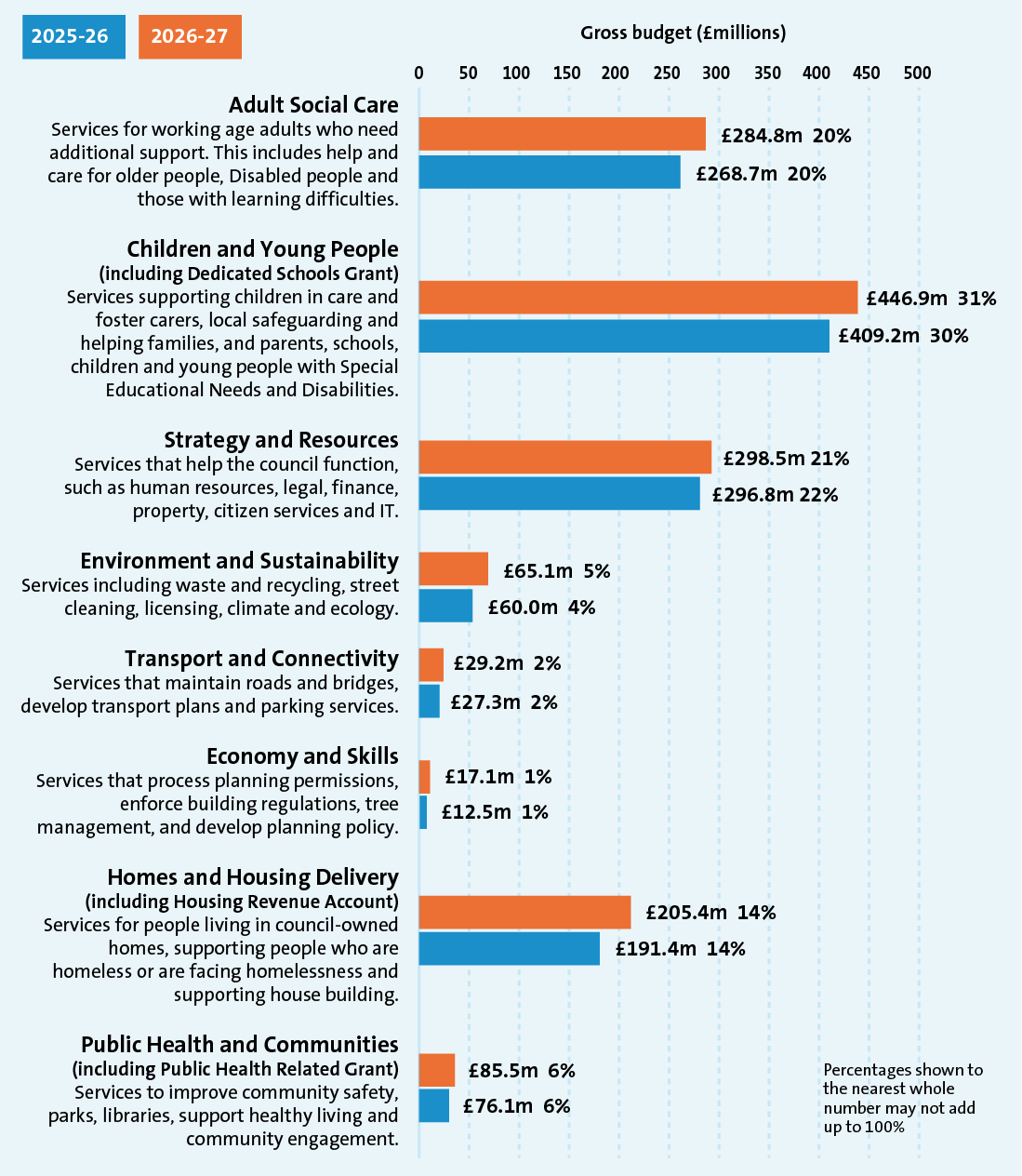
Figure 3: Council spend on services in 2026 to 2027
The budget challenge
Growing demand and rising costs
Like councils across the country, Bristol is still facing significant financial pressures.
The need for council services continues to increase. More people need support from adult social care, children's services and housing services. Their needs are also becoming more complex. At the same time, the costs of delivering services remain high and funding from central government has not kept pace with the scale of demand facing councils across the country.
The council is also experiencing the continued impact of higher costs across many areas of service delivery. Pay, contracts, utilities, construction and care expenses remain significantly higher than in previous years, increasing the overall cost of delivering services to residents.
Investing to prevent future pressures
While managing immediate financial challenges, we are also focused on taking action that reduces demand and costs in the longer term.
This includes investing in prevention and early intervention, helping people access support earlier before problems become more serious and expensive to address. Evidence shows that preventative approaches can improve the lives of residents while also reducing financial pressure on public services.
We continue to focus investment on areas that can deliver long-term benefits, including housing, infrastructure, climate resilience, employment and skills, and support for children and families.
Preparing Bristol for the future
Bristol's future success depends on more than balancing the budget each year. The city needs affordable homes, reliable infrastructure, resilient public services and sustainable communities. It must also be prepared for the challenges of climate change, including increased flood risk and extreme weather events. These issues require long-term planning and investment today to avoid greater costs in the future.
At the same time, the council is continuing to modernise how services are delivered, finding new ways of working that make better use of resources and technology while protecting the services that matter most to residents.
Balancing next year's budget is therefore only part of the challenge. We must also make sure Bristol remains a city that can grow sustainably, reduce inequalities and provide opportunities for everyone who lives here.
Help for low-income households to meet their Council Tax bills
Council Tax Reduction Scheme
Since 2013, councils have designed their own Council Tax Reduction (CTR) schemes. Bristol has been among only a small number of authorities to retain a fully funded CTR scheme for those that need financial support.
Further information on the Council Tax Reduction Scheme
Other support funds
During the current financial year, 2026 to 2027, we’ve supported low-income households and those in need through a number of further support funds which include the Crisis Payment Scheme and the Crisis and Resilience Fund.
Key dates
- Start date: 14 October 2026
- End date: 25 November 2026